Jean Genius: White Weft’s Guide to Upcycling Denim
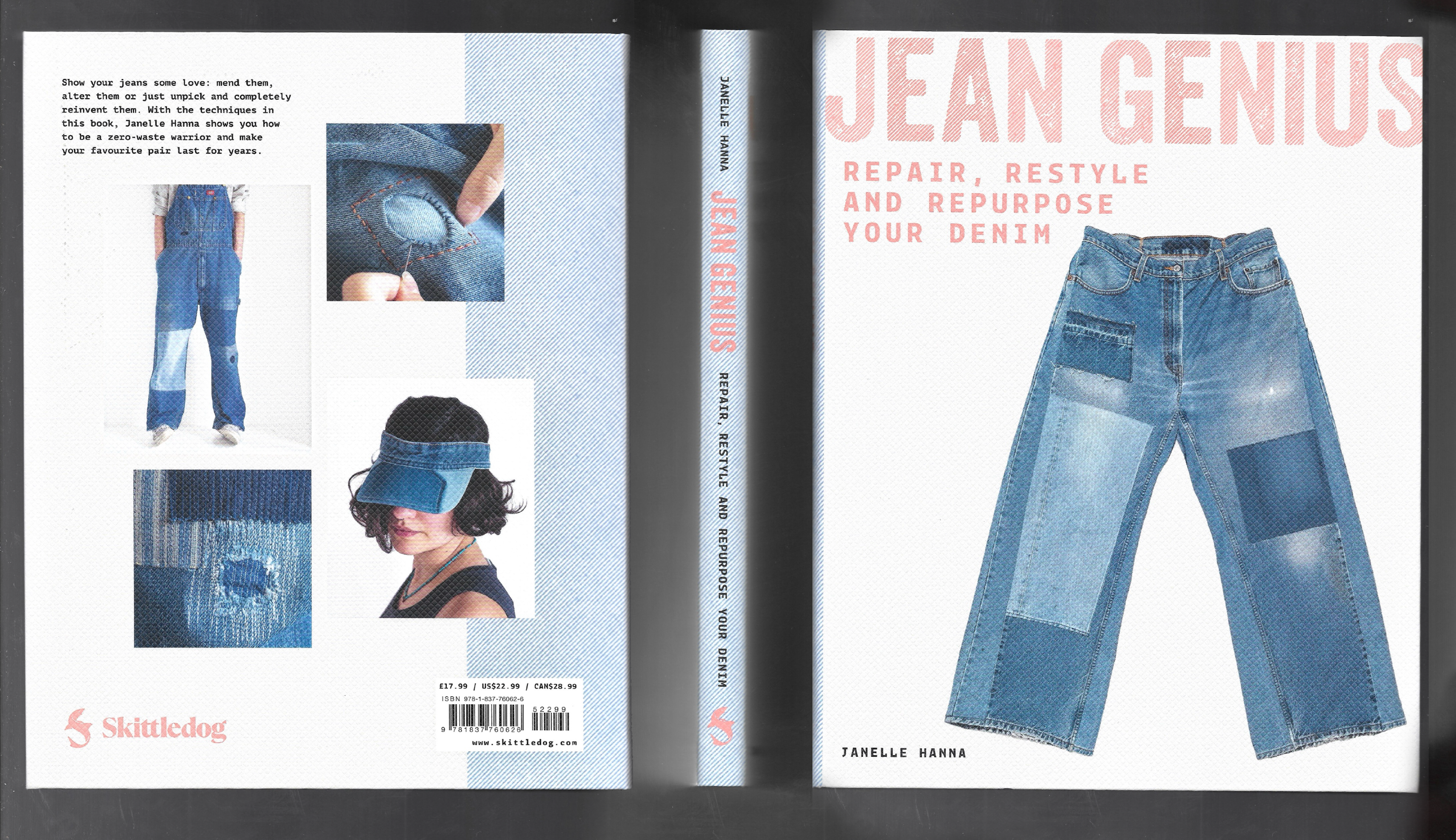
We sat down with Janelle from White Weft to celebrate the launch of Jean Genius, her new book on the art of upcycling denim. Janelle has been part of the Alterist community since the very beginning, a designer whose work, ethos, and patience-first approach to upcycling has shaped the way many of us think about denim today.
With the release of Jean Genius, a book that demystifies denim repair, deconstruction and creative reuse, we caught up with her to talk about childhood cut-offs, the environmental reality of jeans, and why making the most of what already exists matters now more than ever.

Shop Jean Genius Here
You mentioned that your love for denim started as a child. Can you remember the first thing you ever upcycled?
"I remember an older kid from the estate coming back from a summer exchange programme in America with these amazing denim cut-offs with printed cotton frills on the hems. We’d never seen anything like that and thought they were so cool. I tried to recreate them from bits of curtain or old pyjamas or something. A few years later, when I was about 13, I had a short-lived enterprise at school customising people’s jeans with appliqué flowers."
You give a lot of backstory into the environmental footprint of making and dyeing denim — the 7,000–10,000 litres of water used per pair, for example. What’s the fact that shocked you the most, or the one you think people should know?
"I think the most powerful message I’ve received as a denim designer was seeing a pair of Wrangler jeans that had been found in a field after about 20 years. In that time, all of the cotton had of course decomposed, but what was left was a skeleton of the polyester fibre in the jeans, plus all the threads and metal trims. When you touch the garment, a blue indigo dust comes off on your hands, and that was a real lightbulb moment because commercial indigo dye is synthetic; it doesn’t break down.
We have such a surplus of jeans on the planet, most of them with polyester and synthetic stretchy fibres in them. They’re going to be here for at least 200 years, and yet we keep making more jeans — around 4.5 billion of them per year!"
"I want to find ways for us to make wearing out the jeans that already exist more mainstream than buying new ones, and for brands to iron out the friction points that prevent repair and upcycling from becoming an integral part of the product design process."

You’ve worked in denim for over 15 years. How have you seen the conversation around sustainability shift in that time?
"Denim has been quite progressive compared to other fashion categories; it has is very high volume and quite uniform, so that might have allowed manufacturers to invest more readily in machinery. A lot of credit is also due to Greenpeace for their 2011 “Detox my Fashion” campaign, which led to ZDHC, an initiative to remove toxic chemicals from textiles, which has been impactful in the denim industry. The denim community is very close and collaborative. Previously, efforts have focused on water and fibre, ie, regenerative cotton and biodegradable stretch, but the big conversation is now moving towards more sustainable and less toxic dyes.
My frustration is that reducing production volumes and changing business models to promote reuse and repair is rarely part of the conversation."

Janelle Hanna
You’ve described denim as honest and inclusive. What do you think gives denim that universal appeal?
"Five-pocket jeans are so consistent, they become a kind of canvas for creativity and self-expression, and the price is relatively accessible. I think it’s also to do with the fact that denim evolves and improves with age, and because jeans are quite durable, one pair can pass through two or three eras or subcultures with so much potential for reinvention and emotional connection."
When you start sourcing jeans, what do you look for? Are there particular signs that tell you a pair has potential?
"Every pair has potential, but the main thing I’m looking for is pocket bags in good condition and a decent working zip… these are the most expensive bits to repair. Everything else we can work with either with a good wash or a bit of darning."

Shop White Weft
In the book, you’ve got everything from repair to pattern-making in your book. What’s your favourite part of the process?
"I love the new product development - looking at a problem or a waste stream and deciding what to do with it. We try to come up with a use for all the offcuts and components - sometimes it takes years, like we’ve been stockpiling cut-off hems for a year and have only just started making some jewellery from them, but a lot of this is about patience. I often say that patience is the groundbreaking innovation needed to transform the fashion space."
What advice would you give to anyone getting into upcycling?
"It’s going to be hard, I’m not gonna lie. Price your work sensibly, have a business plan and visibility of your cash flow and margins. Speak to people around you who are doing it, so you know what to expect and potential pitfalls."
You launched White Weft in 2018. What’s your advice for turning upcycling into a career?
"I can only say what works for me at this moment, and that's growing things slowly, steadily, and entirely self-funded. As I don’t have large amounts of cash to invest, I make it work by having diverse income streams…consulting, repair and upcycling.
That's worked for me in this phase of my life, but it is slow and can be frustrating; there's just me and a couple of part-time staff, and I definitely don't do enough marketing and PR… we’re reliant on brand partnerships and word of mouth.
In the next 2 years, I’d like to find a business partner or investor to move to the next phase."
You were one of the first Alterist designers. Can you tell us what made you want to join, and what’s been your favourite part of being part of the community?
"I really love Alterist’s mission to back upcyclers and showcase the amount of work that goes into each piece and the impact buying something remade can have. I mean, clearly, it is about aesthetics, but it can never be just that because everything can always be faked for a fraction of the price. I love how successfully you elevate the process by having makers and live customisation in the pop-up spaces. It’s powerful and important."

Are there any other brands or designers you think people should follow or take inspiration from?
"I’m interested in processes and business models that work and can realistically replace new products. So while I might not align on everything they do, I think the scale and systems behind Coachtopia are a really interesting example of commercially viable upcycling. I work with brands on Circular design training, and often they think this sort of volume is impossible and that upcycling can only be a small marketing drop. And on the other side of the coin, something more grassroots and community-minded, Suay shop really inspires me. I love their problem-solving approach to waste streams and creative reuse initiatives like the community dye baths."
Upcycling is often seen as something small-scale and hands-on — do you think the techniques you use at White Weft make it scalable for larger production, or is the beauty in keeping it one-of-a-kind?
"I was a commercial denim designer for 15 years before starting white weft, and I still work with bigger brands in my consultancy work, so I suppose I am always trying to refine processes for production and to improve margins, and in the case of upcycling, make sure we’re not losing money! But that's a risk as well; there definitely needs to be those stand-out creative pieces that show all the skill and flair in what you do."
Finally, what do you hope people take away from Jean Genius?
"I’d love people who don’t have much sewing confidence to feel like they can just give it a go! And for the more experienced sewists, they pick up some tips that make working with denim a bit easier. The jeans deconstruction guide is my top tip for upcyclers and worth the £17.99 in itself, in my opinion — I dearly wish I’d had that on day one of White Weft; it would have saved me so much time and so many bleeding fingers!!"
For anyone wanting to see White Weft in the flesh, you can find their work or upcoming projects by following @white_weft on Instagram!
2nd December 2025
Share post


