Make Your Own Loop Bag with GEO KNITS SLOW Pattern
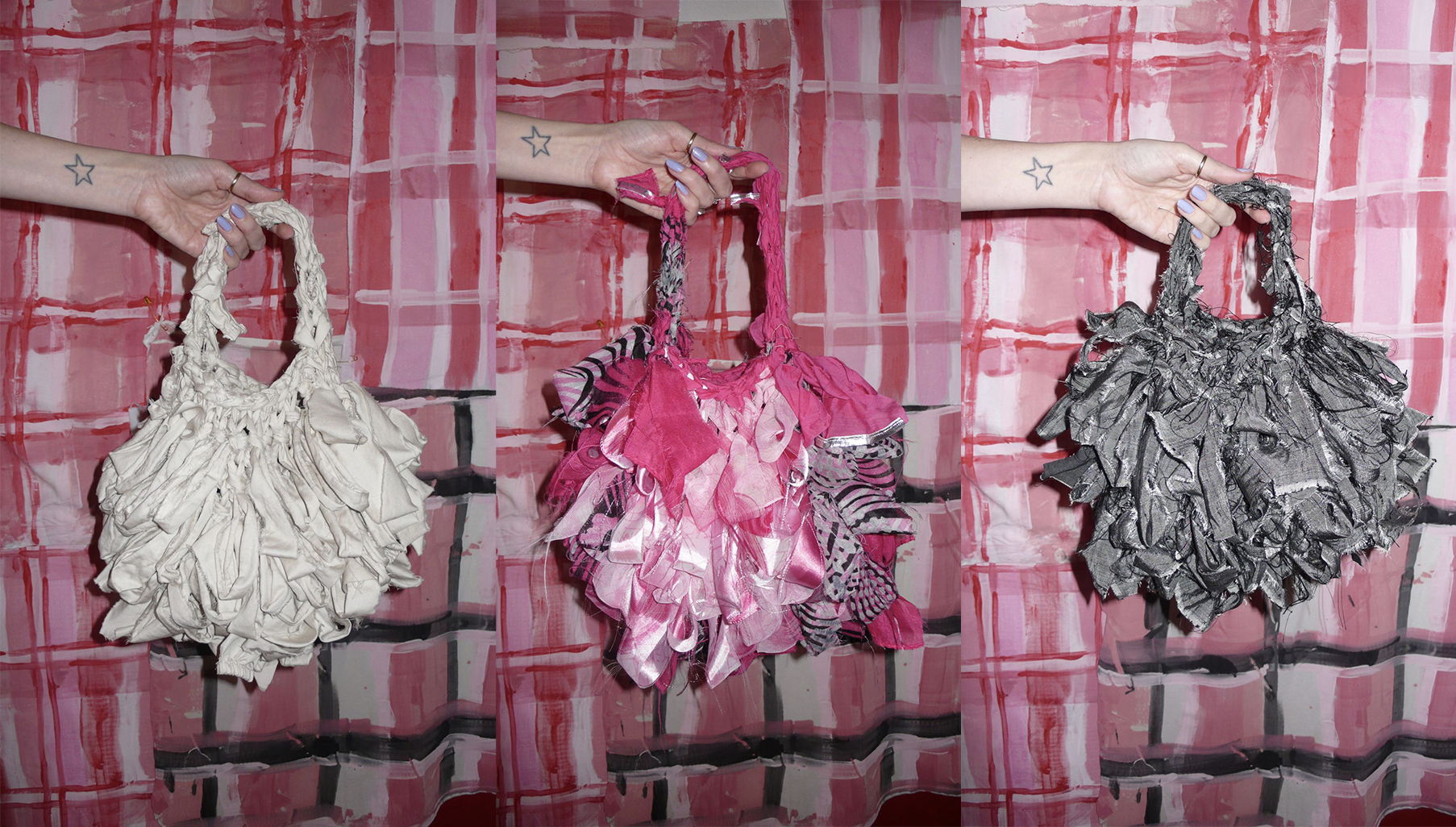
Create your own Geo Knits Slow Loop Bag using textiles you already have. Get the pattern and start making. Buy the pattern here.
Geo Knits Slow has spent over a decade working with what already exists — turning old textiles, offcuts, and found materials into expressive, tactile knitwear.
Now, you can learn her process at home.
The Loop Bag Pattern is an introduction to turning waste textiles into yarn and knitting them into your own one-of-a-kind piece. Using simple techniques like loop stitch, the pattern guides you through creating a textured, durable bag from materials you already have — from worn garments to fabric scraps.


Shop GEO KNITS SLOW Store
Geo has been part of the Alterist community for the past three years, sharing this approach through hands-on workshops. This pattern is a natural extension of that — an open invitation to rethink textile waste, get creative, and make something entirely your own.
Below, we spoke with Geo about her journey, her process, and why working with waste materials changes how we think about clothes.
Q&A with GEO KNITS SLOW

Can you tell us a little about yourself and how Geo Knits Slow began?
Hi, I’m Geo, and I’ve been making knitwear since I finished my studies in Bristol back in 2012. I didn’t actually learn how to hand knit until I left my fashion and textiles course, which I think is funny.
I wanted to make clothing that was slow and the opposite of fast fashion — hence the name. Back when I started working with second-hand and waste fabrics, it was still really early days. I remember thinking, wow, how am I going to convince people to get into wearing dirty old bedsheets?!
But I was so adamant that things could be made out of textiles that already existed — and even celebrated to be given more life — so I kept going. Now here I am, over 10 years later, still picking up soggy T-shirts off the street.
What first drew you to knitting and crochet?
I really wanted to be able to create interesting textures in the things I was making, and I found that knitting was very freeing in how creative I could be.
I never liked pattern cutting. I don’t like things to be too precise — it doesn’t leave much room for errors, which I think can lead to way more interesting things.
Was there a moment when you realised you wanted to turn textile waste into yarn?
It came from looking at all of these nice textures I was finding in old bedsheets in charity shops. I’ve always loved pink and pastels, so being drawn to bed linens just made sense.
I also wanted things to look like fur, but I wanted a solution that didn’t involve actually using fur. Frayed, ripped textiles made sense to me as a more humane alternative.
How did your practice evolve from personal experimentation into workshops and teaching others?
I’ve moved around a lot, and I found that textiles were a great way of making friends and having a reason to show up somewhere when I didn’t know anyone.
When I moved to London, I found it really hard to create community outside of pub culture, so I started a knitting workshop so people had a different way of getting together.
Where do the textiles you use usually come from?
These days, anywhere. I pick things up from the street, friends who are set designers give me fabrics after shoots, charity shops are still great for bed linens, and I find things at flea markets and film sets. Small designers also give me their offcuts and scraps.
I have to be careful not to hoard too much, but I’m still quite particular about what I like.
What kinds of fabrics work best when turning textiles into yarn?
Cotton, definitely. It rips quickly, the frayed edges create a really beautiful texture, and it glides nicely in your hands when you’re knitting.
Is there a particular piece you’ve made where the story of the original garment really stood out?
I’d say my loop bags. They really capture the feeling of what I’m trying to achieve with waste textiles.
They’re textured and whimsical, but not a huge commitment to wear — just a subtle, playful statement using waste materials.
How does working with reclaimed materials influence your creative process compared to traditional yarn?
It can be a bit more limiting, but that also makes me more creative. The textiles I find — or am given — really inform how the garment is going to turn out.
If I run out of a colour before finishing a piece, I can’t be precious about things matching. I just have to pick a new colour or texture and move on.
For people who have never tried it before — how do you turn old textiles into yarn?
You basically cut your textiles into strips and use those as your yarn. It’s simple, but it completely changes how the material behaves.
What is loop stitch and why did you choose it for the bag pattern?
It’s a technique that allows you to add texture into your knitting. It’s how I create those fluffy, tactile surfaces — it lets me make these silly little fluffy bags.
What do you think crochet and knitting offer that fast fashion doesn’t?
The opportunity to slow down. It helps us value how clothes are made and the many hands that go into making them.
Why do you think people are increasingly drawn to making things by hand again?
I think people are looking for things that feel real — real connections, real crafts, and a real sense of achievement.
Making things by hand helps me get off my phone and reconnect with my own creativity and identity. It can feel like we’re constantly being told what to like and how to be.
What do you personally love most about the rhythm of knitting or crocheting?
I like that it’s slow. I rush around a lot, always trying to achieve more, but knitting calms me. It helps me focus on an album or a podcast — it’s simple.
What do you think the fashion industry could learn from craft traditions?
So much. There’s knowledge in how ecology works, how people learn from each other, and how stories are told through craft.
Everyone talks about the climate crisis, but I really believe that if we stopped and listened to traditional craft practices, the answers are already there.
You’ve been teaching workshops through Alterist — what do people usually discover when they try this for the first time?
First comes frustration — it doesn’t flow like traditional knitting.
But once people stick with it, they realise how freeing it is. I encourage people to go outside the normal rules. If someone makes a hole, we just tie it up and make it part of the texture, then move on.
Do people see their old clothes differently once they realise they can transform them into yarn?
Yes, definitely. Once you understand that materials can be reused like this, it completely changes how you look at what you already own.
Your work has a strong DIY spirit — how important is experimentation in your practice?
It’s everything. I take pride in it feeling DIY because I truly believe anyone can experiment — there’s no right or wrong way.
My workshops are about helping people fall in love with their own creativity.
Do you think imperfection plays a role in the beauty of upcycled pieces?
It’s a huge part of it. Imperfection makes something feel personal and tells a story.
People connect more with pieces that have sentiment behind them — like something passed down from a family member. You treat those things differently, and you keep them for longer.
What would you love to experiment with next?
I’m really enjoying making corsets at the moment. It’s such a refined and structured part of craft, and I like putting my own spin on it — making imperfect, slightly bizarre pieces that don’t quite do what corsets are meant to do.
What advice would you give someone who wants to start knitting or crocheting with reclaimed textiles?
Just do it. Don’t be afraid if it feels messy — that’s the best part.
If you could change one thing about how people think about textile waste, what would it be?
That it’s not as disgusting as you might think.

Shop GEO KNITS SLOW Store

5th April 2026
Share post


